
The first time I seriously moved an overseas self-drive trip from the “planning stage” to “actual execution” was during my visit to Okinawa.
Partner Brands We Love
Takingshape.com
Fashion that fits your life — and your shape.
CredoBeauty.com
Clean, ethical beauty — where skincare meets conscience.
At first, I didn’t give the car rental process much thought; I assumed it was simply a matter of landing, picking up the car, and driving off. However, once I started doing my homework, I realized that renting a car abroad is far more complex than imagined: there are numerous platforms, a myriad of rules, and complicated insurance tiers. Add in the language barrier, and every step requires careful verification.
It was during this process that I used JejuPass’s overseas rental feature for the first time. I discovered that it operates on a completely different logic than the “rental platforms” I was used to; instead, it felt like a reimagined gateway to the entire self-drive travel experience.
What follows is a record of my actual experience during a five-day self-drive trip in Okinawa, covering everything from pickup to return.
Day 1 | Landing in Okinawa + Picking Up the Car: From the Airport to My “First Real Self-Drive”
I was actually a little nervous on the day I landed in Okinawa.
Even though I had booked the car in advance via JejuPass, the prospect of picking up a rental car in a foreign country still felt full of unknowns.Even though I had booked the car in advance, the prospect of picking up a vehicle in a foreign country still felt full of unknowns.
After leaving the airport, I followed the signs to the rental car shuttle pickup point—a crucial first step in the experience. Many rental companies in Okinawa aren’t located inside the airport terminal itself; you have to take a shuttle bus to their branch offices. Without prior information, this part of the process can easily cause panic.
When the shuttle arrived, staff members checked names and booking details against their records one by one. The process moved quickly but remained orderly.
The actual pickup process began once we arrived at the JejuPass branch.The actual pickup procedure began once we arrived at the rental office.
First came the document verification—a step that was stricter than I expected. They checked my driver’s license, the translation document, and the booking details. Next was the contract review; the staff explained the insurance coverage again, avoiding overly complex jargon and instead clearly outlining “what you are liable for versus what is covered.”
This was a key point for me, as the biggest fear when traveling abroad isn’t the price, but the risk of “thinking you understand something when you actually don’t.”
After signing the contract, it was time for the vehicle inspection. A staff member walked around the car with me, marking existing scratches and having me confirm the fuel level and the vehicle’s general condition. This step is actually crucial, as it directly determines whether disputes might arise when returning the car.
The entire pickup process went more smoothly than I expected, but what truly put me at ease wasn’t the speed—it was the clarity of information. Every step was clearly defined; there were no “gray areas.”
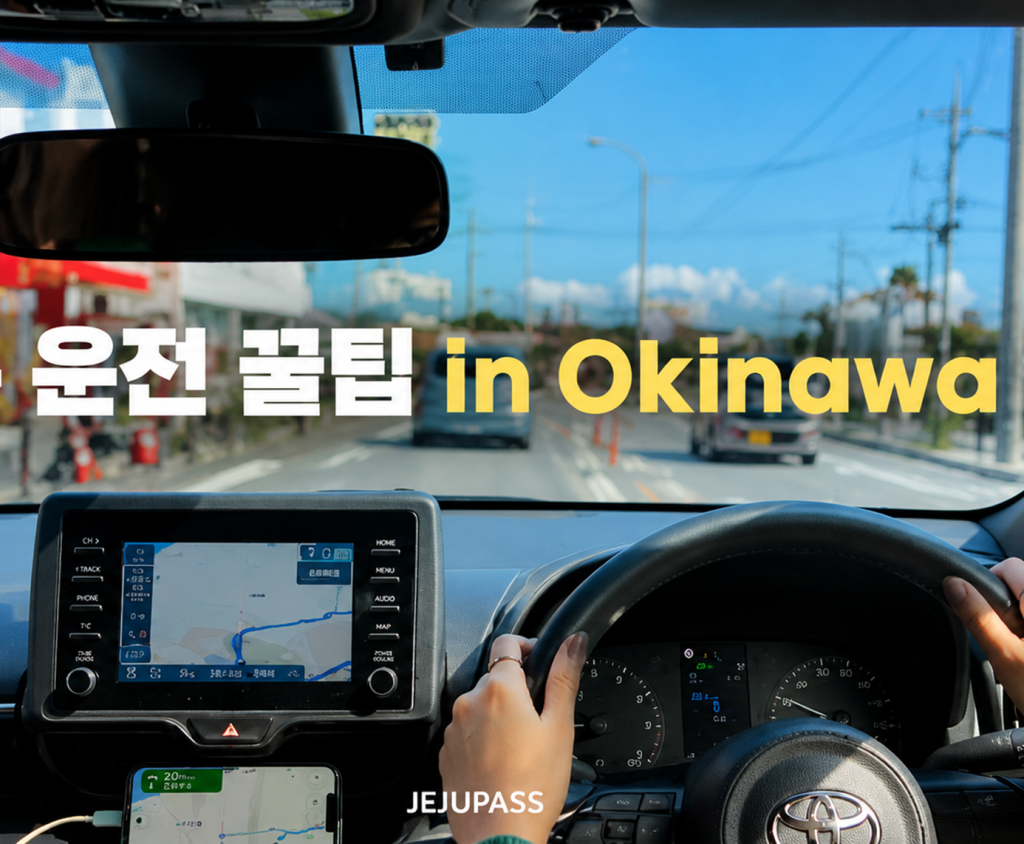
The moment I drove out of the parking lot, I felt like the road trip had truly begun.
Day 2 | Getting to Know Okinawa: From “Nervous Driving” to “Following the Coast”
After hitting the road on the first day, there was still a period of adjustment.
Okinawa’s roads are quieter than I imagined, yet they require close attention to details—such as the rhythm of intersections, changing speed limits, and some narrow country lanes.
At first, I drove with intense focus, even deliberately slowing down to double-check every intersection. But by the second day, as my body adapted, my attention shifted from “operating the vehicle” to “taking in the scenery.”
Okinawa’s coastline is continuous; as you drive, you constantly see the sea changing. This experience easily draws you into a steady rhythm—it’s not about rushing to a destination, but simply moving through the landscape.
Since the car rental and insurance details were sorted out beforehand, I didn’t have to deal with any logistical hassles during the trip, which made the whole journey feel much lighter.
Day 3 | Truly Settling into the “Coastal Road Trip Rhythm”
By the third day, I had fully adapted to the pace of driving in Okinawa.
I didn’t pack the day with a tight schedule of tourist attractions; instead, I drove leisurely along the coast, stopping whenever I spotted a nice viewpoint.
What makes Okinawa interesting is that the trip isn’t about hopping from one specific attraction to another—it’s about a continuous coastal experience. It’s hard to single out one specific stretch of road as the highlight, because the entire journey is part of the scenery.
The biggest change during this phase wasn’t in my route, but in my state of mind.
I stopped constantly checking the GPS or worrying about where to go next, allowing the itinerary to unfold naturally instead.
Day 4 | The Most Relaxed Day: No More Decisions
By the fourth day, I could clearly feel the trip entering a more relaxed phase.
With all the logistical basics settled in the preceding days, I no longer had to think about car rentals, insurance, or traffic rules; the only decision left was where to drive that day.
This state of “minimizing decisions” is important—it has a direct impact on travel fatigue. When you have to process a massive amount of information every day, even the most beautiful scenery can leave you feeling drained. However, when those logistical details are sorted out in advance, the travel experience itself becomes much purer.

Day 5 | Returning the Car: From “Active Use” to “Closing the Loop”
The itinerary for the final day was simple: a leisurely drive from the coast back to the area near the airport.
Returning the car is just as crucial a step as picking it up.
Upon arriving at the JejuPass location, staff inspected the vehicle’s condition. I was a bit nervous at first, but the process went smoothly. Since the car’s condition had already been documented at pickup, the return involved only a quick verification—no complicated disputes.Upon arrival at the rental location, the staff inspected the vehicle’s condition. I was a bit nervous about this part at first, but the process went smoothly. Since the car’s condition had already been documented at pickup, the return involved only a quick verification—no complicated disputes.
Then came the final settlement and confirmation; the whole process wrapped up quickly.
The moment I handed over the car keys, I felt a distinct sense that the trip was truly over—not just because the itinerary had ended, but because the logistical “structure” of the journey had been closed out.
What Truly Drains You When Traveling Is the “Complexity of Preparation”
After this self-drive trip in Okinawa, my biggest takeaway was this: what really shapes the travel experience isn’t the distance you drive, but how much energy you’ve already expended before you even set off.
If the preparation phase is overly complex, you carry that fatigue with you throughout the trip; if the preparations are clear and organized, it’s much easier to fully immerse yourself in the journey itself.
For me, the difference JejuPass made was allowing me to quickly transition from someone “processing information” to someone simply “being on the road.”